skip to content

Department of Physiology, Development and Neuroscience

 
Read more at: Building a biological lab

Building a biological lab

15 January 2026

After waiting over a decade for LEGO to create a model set that represents the biological labs familiar from his own research work, PDN postdoc Chu-Cheng Lin has taken up the challenge and built his own model concept for an accurate biological laboratory set. By building a realistic LEGO biological laboratory and...


Read more at: Context-dependent activation of V1 parvalbumin interneurons enhances visual discrimination

Context-dependent activation of V1 parvalbumin interneurons enhances visual discrimination

15 January 2026

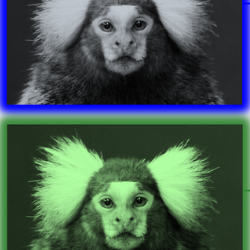
Inhibition is critical for balanced cortical activity and learning. Parvalbumin-expressing cells (PV) are the most common cortical inhibitory interneurons. Strong PV activation inactivates cortical regions. However, how moderate activation of PV interneurons shapes visual perception and behaviour is not well understood. A...


Read more at: International Anatomy Immersion Award recipient hosted at PDN

International Anatomy Immersion Award recipient hosted at PDN

15 December 2025

At the end of November, the Human Anatomy Centre, within PDN, hosted the winner of the 2025 International Anatomy Immersion Award, Australian 3rd year Medical student Zac Thornton . Coming during its inaugural year, the program offered by the Australian Institute of CPD Standards and Miga , gives one outstanding medical...


Read more at: Awards for Dr Eleanor Raffan

Awards for Dr Eleanor Raffan

9 December 2025

Double congratulations to Dr Eleanor Raffan , who has just been announced as one of eight University of Cambridge researchers, who will receive a share of the European Research Council’s (ERC) record €728 million Consolidator Grant awards this year, and has also been named as one of three finalists in the 2025 Canine...


Read more at: Self-repair system in the developing skeleton helps bone recovery from growth disorders

Self-repair system in the developing skeleton helps bone recovery from growth disorders

27 November 2025

A new study , just published in Nature Communications, led by researchers in the Roselló-Díez Lab has found a self-repair system inside the developing skeleton that helps bones recover from early growth disorders. The team discovered that when cartilage growth is interrupted, a small population of stromal cells surrounding...


Read more at: Golden retriever and human behaviours driven by same genes

Golden retriever and human behaviours driven by same genes

25 November 2025

Researchers have discovered that genes underlying specific behavioural traits in golden retrievers - from trainability to fear of strangers - also shape human personality and mental health. A study led by Dr Eleanor Raffan , and first author PDN PhD student Enoch Alex, provides a window into canine emotions, revealing why...


Read more at: European Research Council Grants awarded to PDN scientists

European Research Council Grants awarded to PDN scientists

6 November 2025

Two PDN scientists, along with colleagues in the School of Biological Sciences, and other European institutions, have been awarded Synergy Grants from the European Research Council (ERC). This major funding will support interdisciplinary projects in innovative areas of the biological sciences. ERC Synergy Grants foster...


Read more at: PDN led researchers win Wellcome grant for extreme heat study

PDN led researchers win Wellcome grant for extreme heat study

3 November 2025

Wellcome have awarded a £1.8 million grant to a Cambridge-led research consortium to study the life-long and intergenerational mental health effects of extreme heat on pregnant women and their children. An international team of researchers from Cambridge, University of New South Wales Sydney, Australia ( UNSW ) and...


Read more at: Estrogen essential for the maturation of kisspeptin-releasing neurons at puberty

Estrogen essential for the maturation of kisspeptin-releasing neurons at puberty

22 October 2025

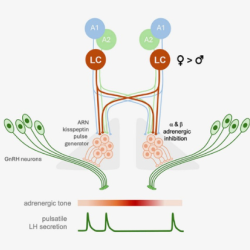
In mammals, fertility is controlled by the brain via the Hypothalamic-Pituitary-Gonadal (HPG) axis. Before puberty, HPG hormone secretion is suppressed or low. Just before puberty, sex steroid hormones released from the gonads increase and act on the hypothalamus and pituitary. What regulates the activation of the HPG axis...


Read more at: 'Good' gut bacteria boosts placenta for a healthy pregnancy

'Good' gut bacteria boosts placenta for a healthy pregnancy

7 October 2025

When Bifidobacterium breve, widely available in probiotic drinks, is present in the gut of pregnant females it boosts the placenta’s production of pregnancy hormones to reduce the likelihood of complications like preeclampsia and miscarriage. Research led by PDN has found the first clear evidence that the ‘good’ gut...